Become a PADI Rescue Diver
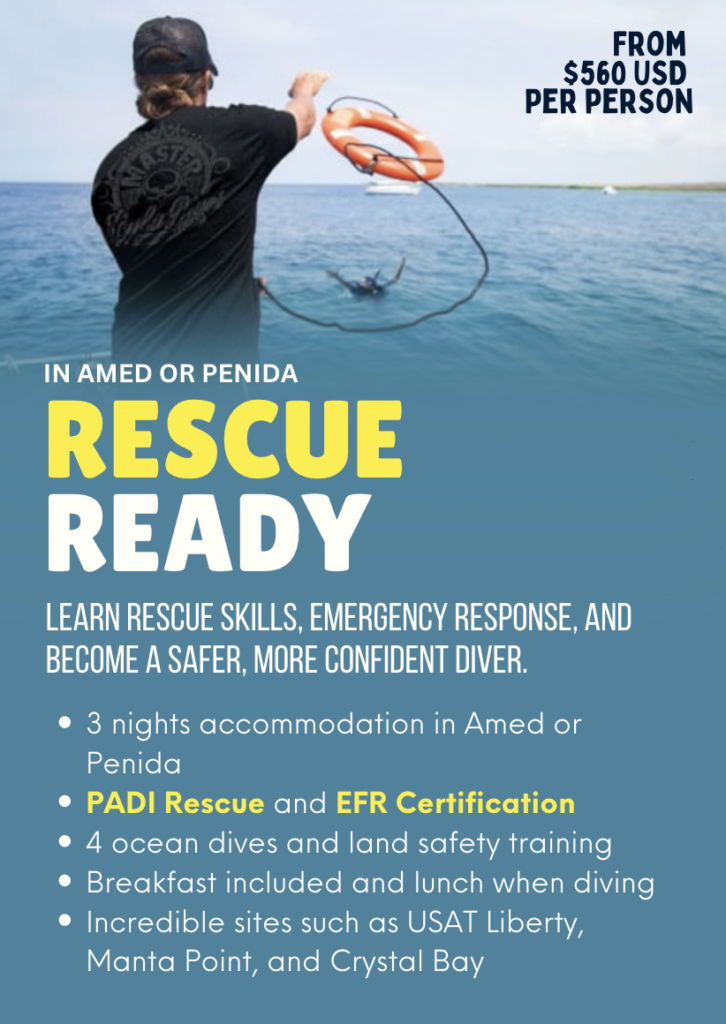
Train with expert PADI instructors in Bali and gain real-world rescue skills, including optional Emergency First Response (EFR) first aid training for complete diver safety
Why Choose Jukung Dive for Your PADI Rescue Diver Course in Bali
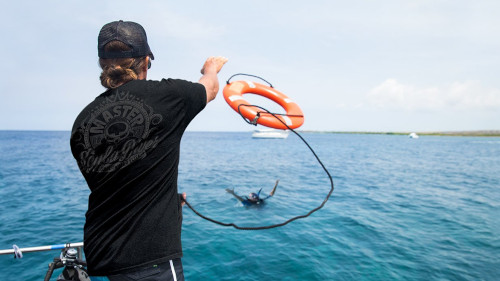
As the first 5-Star PADI Dive Resort in Amed, trusted since 2004, Jukung Dive is one of Bali’s most established dive centres. Our experienced PADI instructors have decades of experience delivering Rescue Diver and Emergency First Response training, with a strong focus on confidence, safety, and calm, real-world problem solving. You can complete your PADI Rescue Diver Course in Amed or Nusa Penida, choosing between two excellent training environments. Amed’s calm volcanic bays provide ideal conditions for controlled rescue skill development, while Nusa Penida’s clear reefs allow for realistic rescue scenarios in open-water conditions. Both locations prepare you to respond effectively to diving situations anywhere in the world.
We run our PADI Rescue Diver courses in small groups to ensure personalised coaching and close instructor support. You’ll learn each rescue skill step by step, building confidence in self-rescue, assisting other divers, and managing emergency situations both in and out of the water. If you’re not already certified, Emergency First Response (EFR) training can be completed alongside your Rescue Diver Course. This includes CPR, primary and secondary care, and oxygen use for diving emergencies, all taught on site at our Bali dive centres.
Your course includes full rental dive equipment, PADI eLearning materials, and on-site coordination by our team. We also offer stay-and-dive packages and can arrange transport between Amed and Nusa Penida if you choose to combine locations, making your Rescue Diver Course in Bali as smooth and stress-free as possible.
WHAT IS THE PADI
RESCUE DIVER?
If you’re feeling confident in your diving and ready to take the next step, the PADI Rescue Diver Course focuses on awareness, problem-solving, and looking after others. You’ll learn to recognise stress, assist a diver in trouble, and prevent incidents before they happen. Often described as one of the most rewarding PADI courses, it builds confidence both in and out of the water. Optional Emergency First Response (EFR) training can be added if required.
Training begins with confined water sessions with self-rescue skills and practicing 10 rescue exercises. Then we practice the rescue exercises in the ocean before combining them into 2 rescue scenarios. These sessions focus on realistic situations, helping you apply what you’ve learned in calm, supported conditions. All theory is completed in advance through the PADI eLearning app, covering topics such as diving physiology, pressure-related injuries, and rescue planning. This allows you to spend your time in Bali focused on diving and hands-on training rather than classroom sessions.
You can complete the course in Amed or Nusa Penida. Amed’s calm volcanic bays are ideal for controlled training, while Nusa Penida offers valuable open-water experience at sites like Manta Point and Crystal Bay, building confidence in more dynamic conditions.
The course is taught in small groups with clear coaching and plenty of practice, creating a supportive and enjoyable learning environment. You’ll finish as a safer, more capable buddy, ready for further adventures across Bali and beyond.
Become a PADI Rescue Diver in Amed
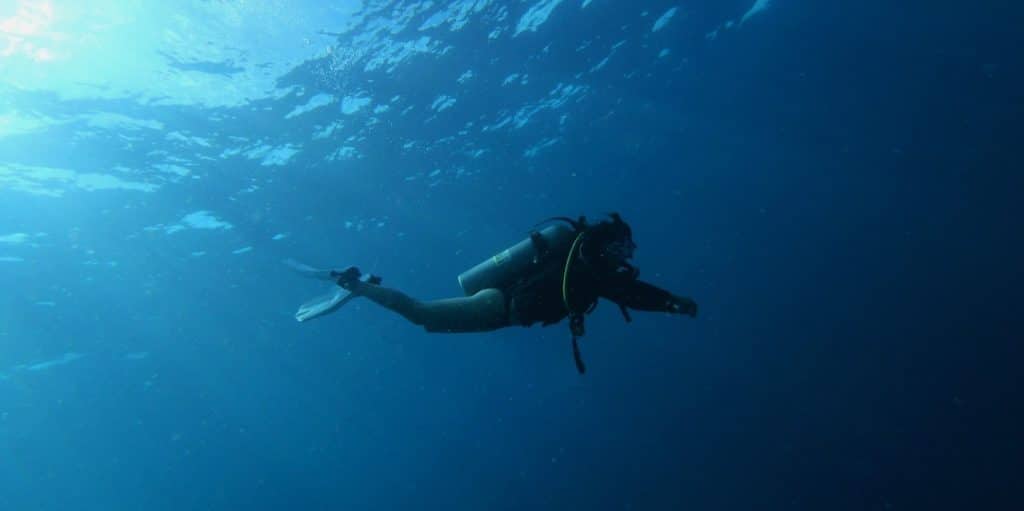
Train in Amed’s calm volcanic bays, ideal for controlled Rescue Diver practice. Shore entries make it easy to practise tows, exits, and search patterns, before applying your skills around the USAT Liberty Wreck in realistic yet well-protected conditions. If you’re looking for a smooth, confidence-building PADI Rescue Diver Course in Bali, Amed offers clear water, minimal current, and maximum practice time in a calm environment.
Become a PADI Rescue Diver in Nusa Penida
Choose Nusa Penida for open-ocean rescue training at world-class dive sites. Practise surface management, boat procedures, and situational awareness in moving water, with training dives around areas such as Manta Point and Crystal Bay during mola season. Nusa Penida is the perfect setting to refine calm decision-making and rescue skills in more dynamic conditions while earning your PADI Rescue Diver certification.
How the Rescue Course Works:
Day 1 – Pool Training (Amed or Nusa Penida)
Meet at 8:00 a.m. for focused Rescue Diver training in the pool. You’ll practise self-rescue skills, assisting panicked and unresponsive divers, controlled tows and exits, and surface management. Lunch is included, and the day usually finishes mid-afternoon. For a lighter pace, Day 1 can be split into two afternoon sessions. Training is conducted in small groups with close instructor support.
Day 2 – Open Water Practice
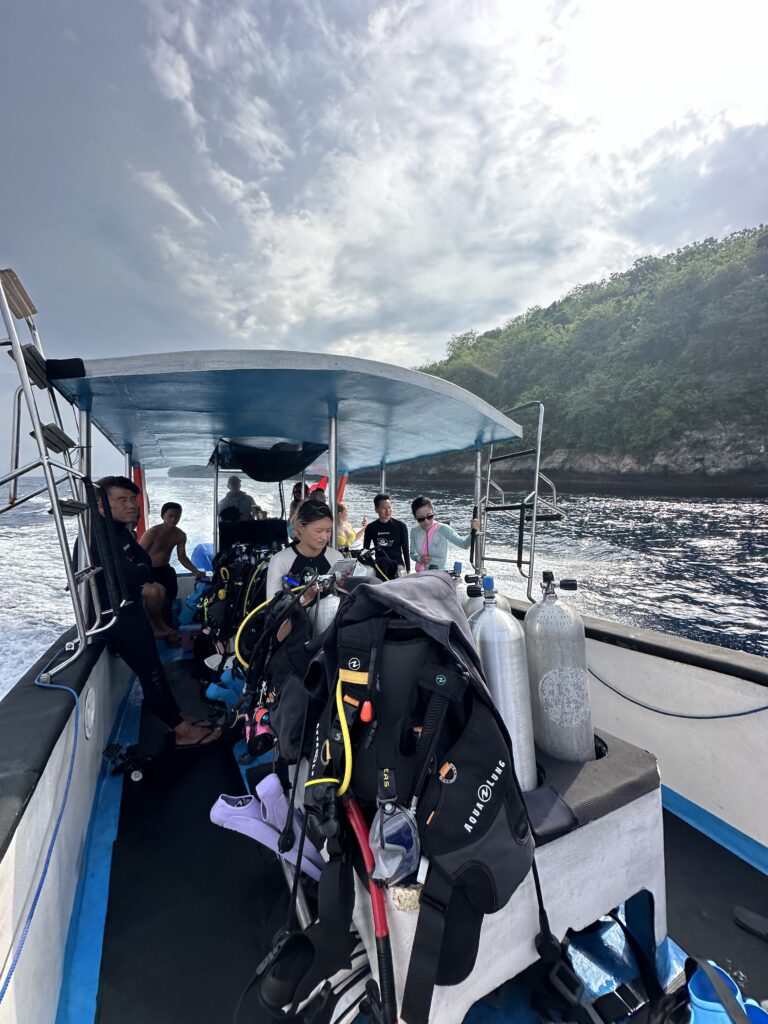
Complete two training dives to transfer pool skills into the ocean at the best sites for conditions in Amed or Nusa Penida. This may include calm practice around the USAT Liberty Wreck in Amed, or gentle drift dives and boat procedures in Nusa Penida. Lunch is typically around 1–2 p.m.
Day 3 – Rescue Scenarios and Certification
The final day focuses on full rescue scenarios, including organised searches, assisting an unconscious diver, and administering CPR and oxygen as part of emergency management. These scenarios mirror real-world diving situations so you finish confident and prepared.
All theory is completed in advance via PADI eLearning before arrival. Emergency First Response (EFR) training can be added as a half-day session if required. This three-day schedule is the most practical and efficient way to earn your PADI Rescue Diver certification in Bali, with flexible training locations in Amed and Nusa Penida.
Jukung Dive Resort Bali
before you book!
To join the PADI Rescue Diver Course, the following requirements apply:
- Certification: PADI (Junior) Adventure Diver with Underwater Navigation, or PADI Advanced Open Water Diver (or equivalent from another training organisation).
- First Aid & CPR: Emergency First Response (EFR) Primary and Secondary Care completed within the last 24 months.
- Don’t have EFR yet? You can add the EFR course in Bali as a half-day session before your Rescue course begins.
- Age: Minimum age is 12. Divers aged 12–14 will earn the Junior Rescue Diver certification.
- Medical: The official PADI medical form must be completed in advance. Depending on your answers, written clearance from a doctor may be required.
- Theory: PADI eLearning is issued after your deposit so you can complete the theory at home and spend your time in Bali focused on diving.
Everything Included in Your PADI Rescue Course
PADI eLearning is issued after your deposit and completed via the PADI app before arrival.
One full day of pool training, covering self-rescue skils and the 10 rescue exercises with our 5-Star PADI instructors.
Open-water training over two days with four dives, focused on realistic rescue scenarios in Amed (calm bays, USAT Liberty Wreck) or Nusa Penida (drifts, Manta Point, Crystal Bay).
Full rental equipment included throughout the course, including a dive computer and compass.
Final PADI Rescue Diver certification included on successful completion.
Locally sourced lunch provided on each training day.
Optional add-on, Emergency First Response (EFR) Primary and Secondary Care, completed in a half day if required.
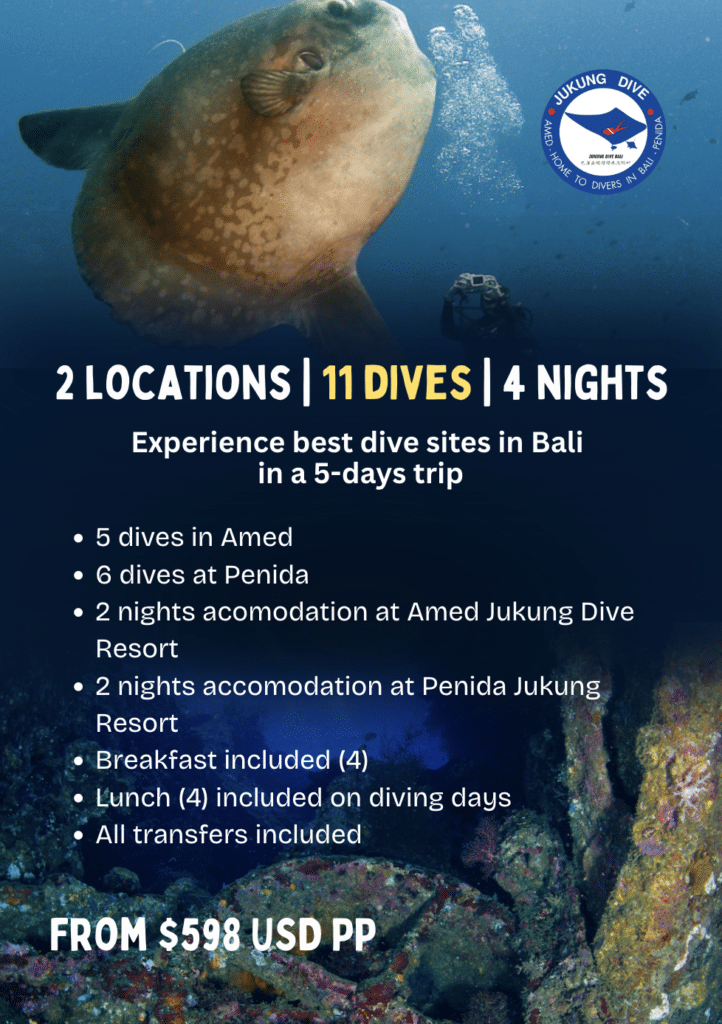
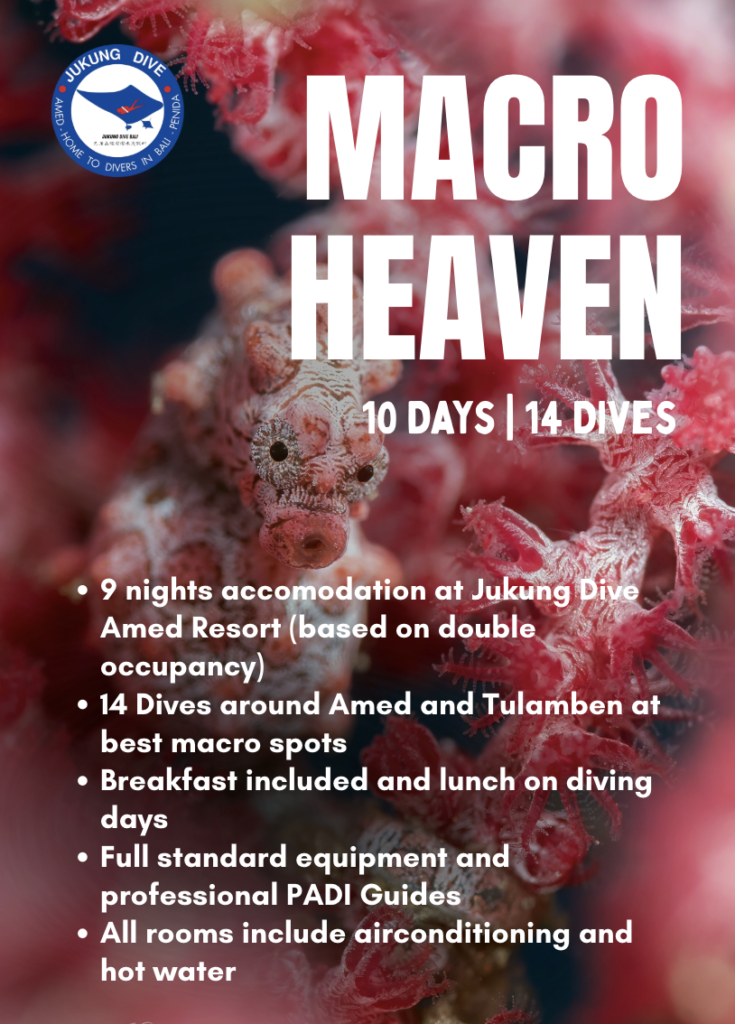
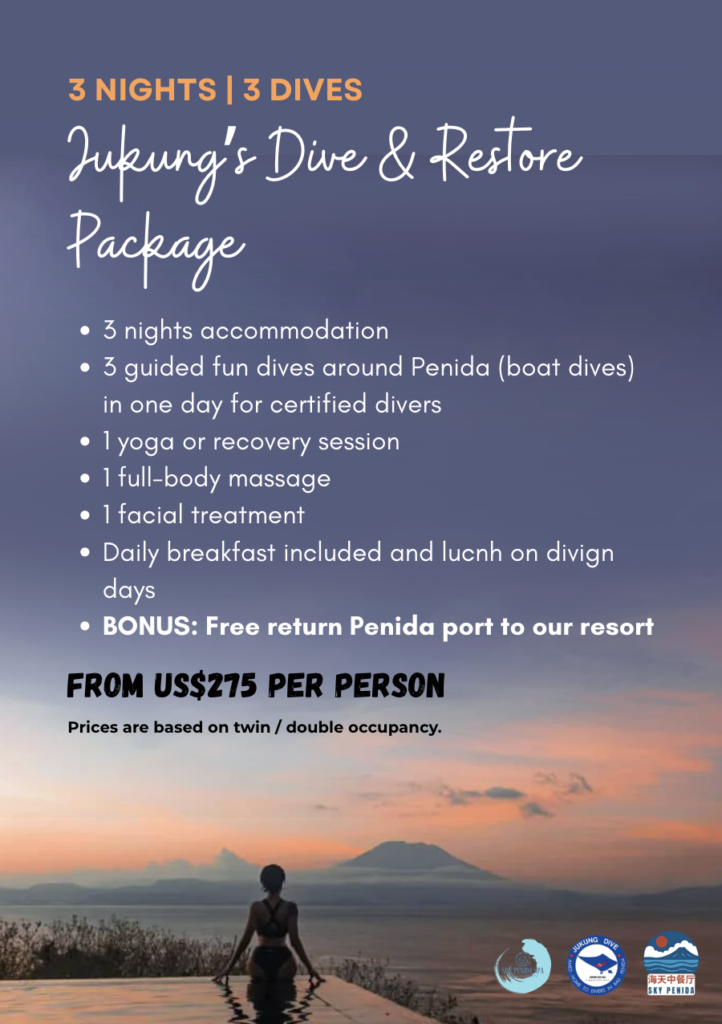
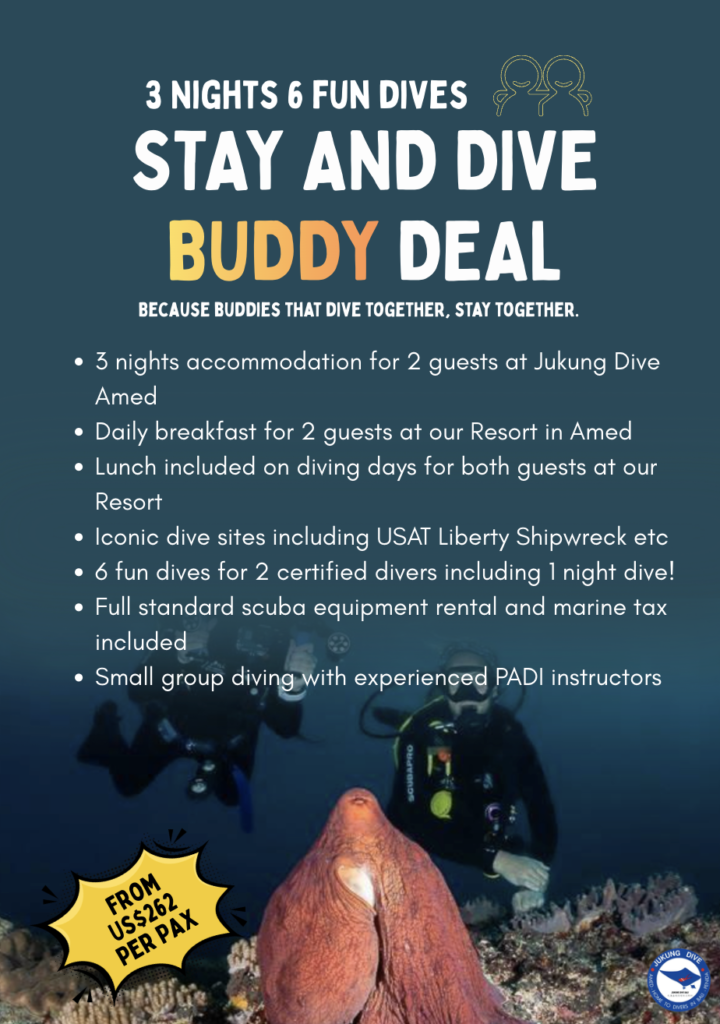
Want everything organised? Our Stay and Dive Packages combine the Rescue Diver Course with accommodation, airport or harbour transfers, and flexible scheduling in Amed or Nusa Penida. Looking to go further? You can also explore our PADI Divemaster course.
Do You Need EFR (Emergency First Response) Training To Become A Rescue Diver
To enrol in the PADI Rescue Diver Course, you must hold a valid CPR and First Aid certification completed within the last 24 months. PADI’s Emergency First Response (EFR) course meets this requirement, although any recognised CPR and First Aid certification is accepted.
If you don’t already have a valid certification, you can easily add EFR in Bali to your booking. We run EFR as a focused half-day course in Amed or Nusa Penida, making it simple to complete before your Rescue Diver training begins.
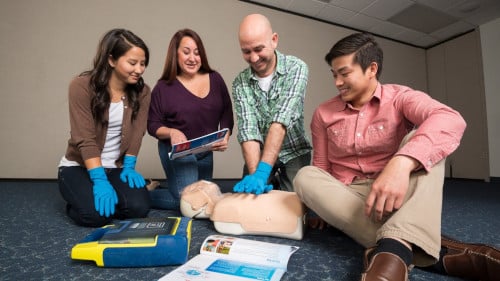
During the EFR course, you’ll learn essential first aid and emergency response skills, including:
Primary Care (CPR), covering adult CPR, AED use, rescue breaths, and choking response
Secondary Care (First Aid), including bandaging, splinting, and illness and injury assessment
Scene assessment, barrier use, emergency planning, and oxygen awareness
Good to know:
Open to both divers and non-divers, so a travel partner is welcome to join
Certification is valid for 24 months and recognised worldwide
Ideal as an add-on to your Rescue Diver course for a smooth, efficient schedule
what will you get from
the padi rescue course
Your PADI Rescue Diver Course includes everything you need to train confidently and earn your certification. After your deposit,
you’ll receive access to PADI online theory through the PADI eLearning app, allowing you to complete the knowledge development
at your own pace before arrival. Training begins with one full day of pool sessions focused on surface and underwater rescue
techniques, followed by four open-water training dives over two days, where you’ll practise skills and realistic rescue scenarios in Amed or
Nusa Penida. Full rental equipment is included throughout the course, including a dive computer and compass, along with all certification fees for
your final PADI Rescue Diver qualification. A locally sourced lunch is provided on each training day so you can stay focused
and energised during the course.
FIND YOUR PERFECT BALI DIVE PACKAGE
What skills will I learn during the PADI Rescue Diver course?
The PADI Rescue Diver course focuses on developing awareness, problem solving, and emergency management skills both in and out of the water. You will learn how to recognise stress in yourself and other divers, manage panicked or unresponsive divers, perform search and recovery scenarios, and coordinate rescues at the surface and underwater. The course is designed to challenge you in a controlled environment and significantly increase your confidence as a diver.
Why is EFR required for the Rescue Diver course?
Emergency First Response training is required because the Rescue Diver course involves managing real world emergency scenarios where first aid and CPR knowledge is essential. EFR ensures you are prepared to respond effectively to diving and non diving emergencies, including breathing problems, injuries, and shock. Any recognised CPR and First Aid certification completed within the last 24 months is accepted, but EFR is the most common and widely recognised option.
Do I need to complete EFR to start the PADI Rescue Diver course?
To enrol in the PADI Rescue Diver course, you must hold a valid CPR and First Aid certification completed within the last 24 months. PADI Emergency First Response, EFR, is the most common option and fully meets this requirement, but it is not mandatory. Any recognised CPR and First Aid qualification is accepted as long as it is current. If you do not already have valid certification, EFR can easily be added to your booking and completed alongside your Rescue Diver training.
Who should consider taking the Rescue Diver course?
The Rescue Diver course is ideal for divers who want to become more confident, capable, and responsible underwater. It is highly recommended for anyone considering Divemaster training, frequent diving, or diving in more challenging environments. Many divers describe Rescue Diver as the most rewarding and transformative course in their diving journey. It is also required to become a PADI Master Scuba DIver the highest non-professionnal, recreational scuba diving certification (other requirement is to have 50 dives and 5 specialties)
What can I do after completing the PADI Rescue Diver course?
After completing the PADI Rescue Diver course, many divers choose to continue building experience through fun diving or progress into professional level training. Rescue Diver is a key prerequisite for the PADI Divemaster course and is often considered the most important step before turning pro. Some divers also choose to add specialities such as Nitrox, Deep, or continue diving independently with increased confidence, awareness, and responsibility in the water. It is needed to become a PADI Master Scuba Diver which is the highest non-professional, recreational scuba diving certification (have 50 logged dives and 5 specialties is also required)
How long does the PADI Rescue Diver course take to complete?
The PADI Rescue Diver course is typically completed over two to three days, depending on your schedule, experience level, and whether you are completing EFR at the same time. Training includes theory preparation, confined water skill practice, and realistic open water rescue scenarios. The course is structured to be intensive but well paced, allowing time to absorb skills and build confidence throughout.