If you’ve been anywhere near our dive centre in the last few weeks, you’ve probably overheard someone talking about “mola mola season.” It’s that time of year again — the cold water is moving in off Nusa Penida, and with it comes the fish every diver on the island is hoping to see.
Meet the Fish That Looks Unfinished: Mola Mola
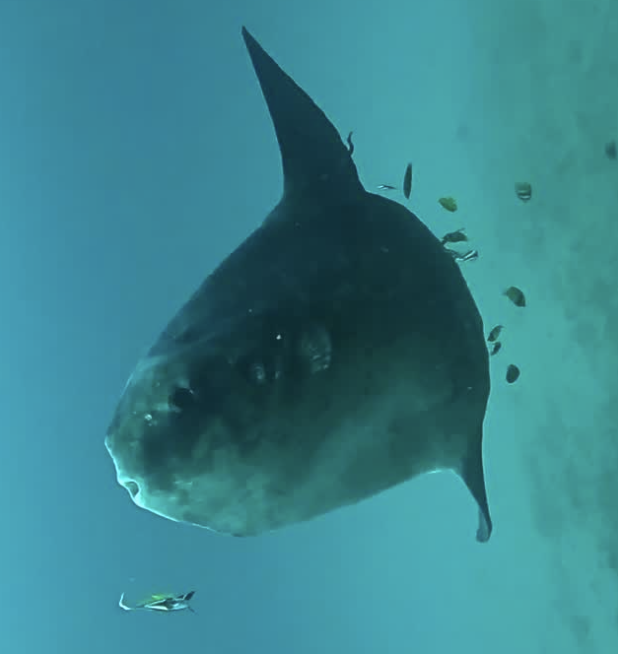
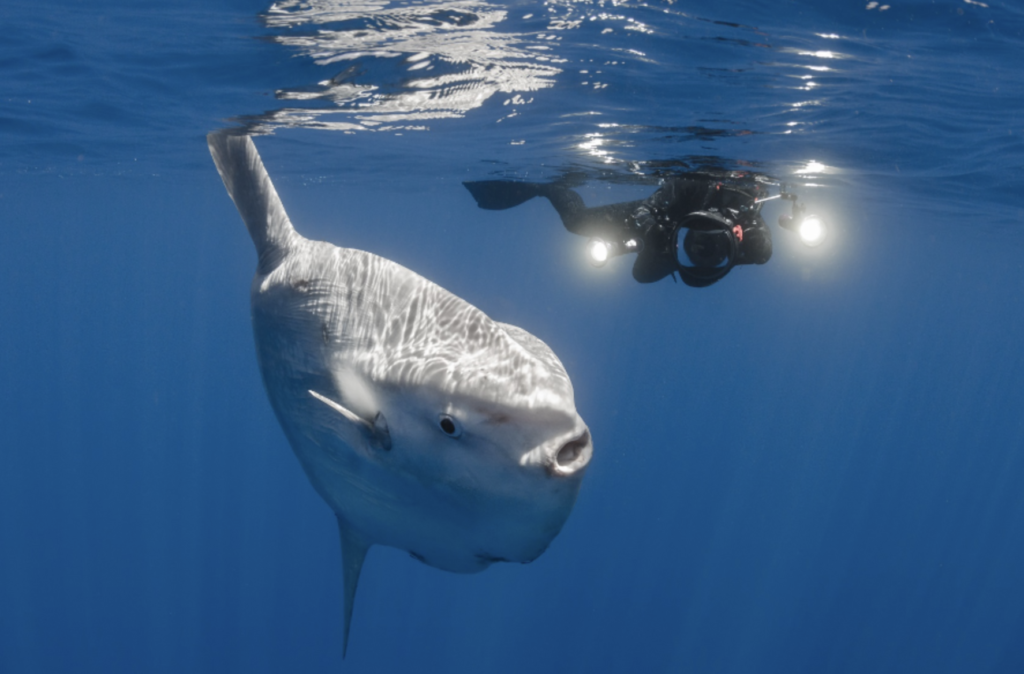
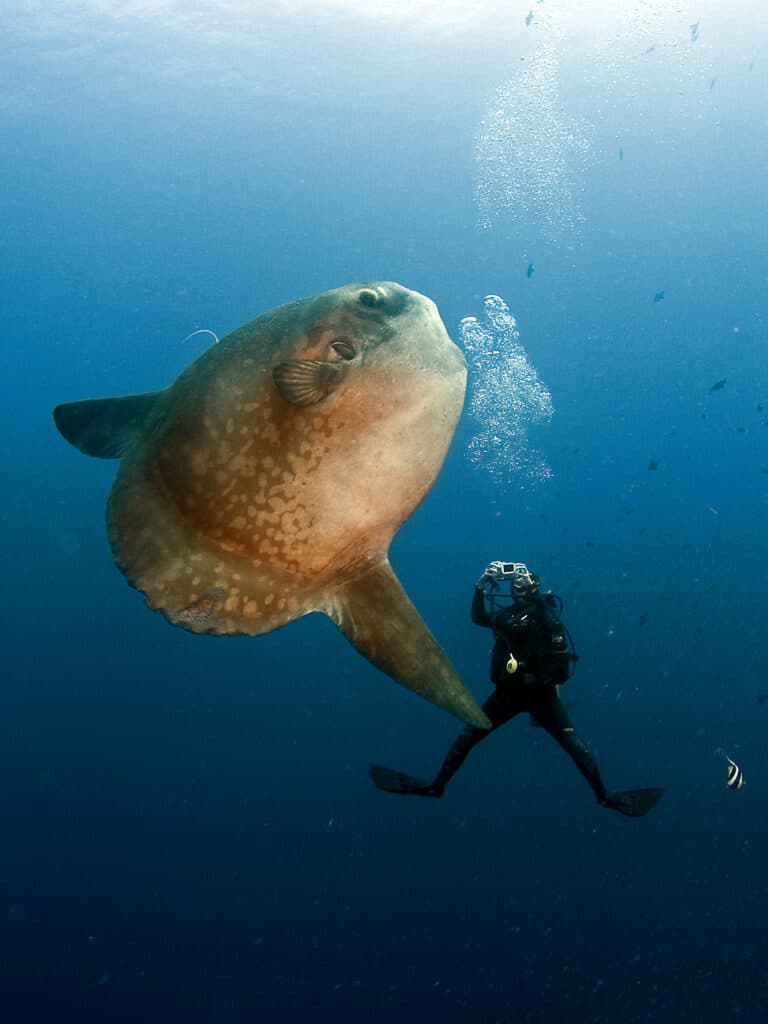
The mola mola — often called the ocean sunfish, though the animal most divers actually meet at Crystal Bay is its larger cousin, the Mola Ramsayi (Giant Sunfish) — is one of the strangest things you’ll ever see underwater.
Picture a fish that’s mostly head, with two oversized fins and a frilled little tail stuck on the back almost as an afterthought. Adults can stretch past three metres and weigh well over a tonne, yet they spend most of their lives far below diving depth, cruising cold water at 200 metres or more, hunting jellyfish and salps.
A few months a year, they come up. That’s the part we’re all waiting for.
Chasing the Cold Water
Mola season at Crystal Bay typically runs from July through to October, with sightings peaking in August and September. Cold-water upwelling pushes deep water — and the mola that live in it — up to depths divers can actually reach, usually somewhere between 18 and 30 metres. Mornings, before the day-boats arrive and before the sun has had time to warm the shallows, tend to give you the best shot.
Crystal Bay gets most of the fame, and for good reason — there’s a well-known cleaning station there where the fish hang mid-water while smaller reef fish pick parasites off their skin, which is exactly the behaviour that gives divers a chance to watch them for more than a few fleeting seconds. But it’s far from the only place they turn up. We regularly see them at Sental, Buyuk, Ped, Toyapakeh, SD Point, and Blue Garden too — and we even had a sighting at Manta Point recently, which isn’t somewhere you’d normally expect one. Point being: keep your eyes on the blue all season, not just at Crystal Bay.
The Thermocline Is Your Friend
Here’s the honest version: you’ll start the dive in warm, clear surface water, and then at some point on the descent you’ll hit a wall of cold. That thermocline is a good sign, not a bad one — it means the upwelling is doing its job. Water temperature at mola depth can drop to 18–20°C, noticeably colder than the rest of a Bali dive, so if you’re joining us for this one, bring (or borrow) a proper 5mm wetsuit rather than your usual 3mm.
Visibility can drop when the cold water pushes through too. That’s normal, and honestly it’s part of what makes the moment so memorable — you’re hovering in the blue, slightly cold, scanning the edge of visibility, when this enormous grey shape just appears out of nowhere and hangs there, completely unbothered by you.
One tip our guides always give: if you do spot one, don’t swim straight at it. Molas are shy — approach slowly from the side, stay low, and let it come to you if it’s going to.
The Honest Odds
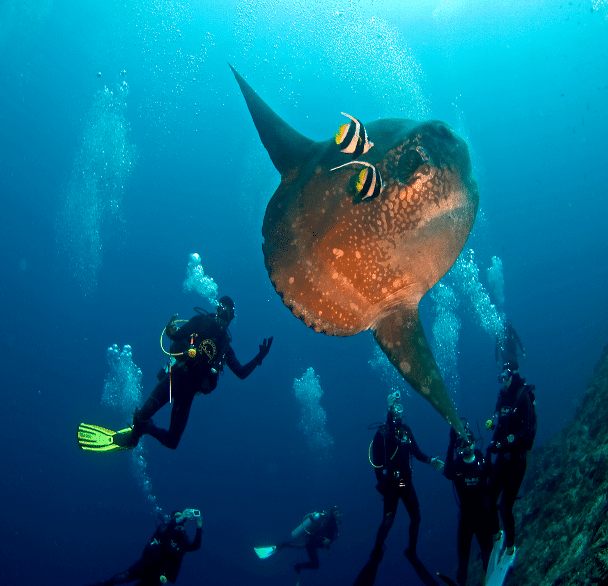
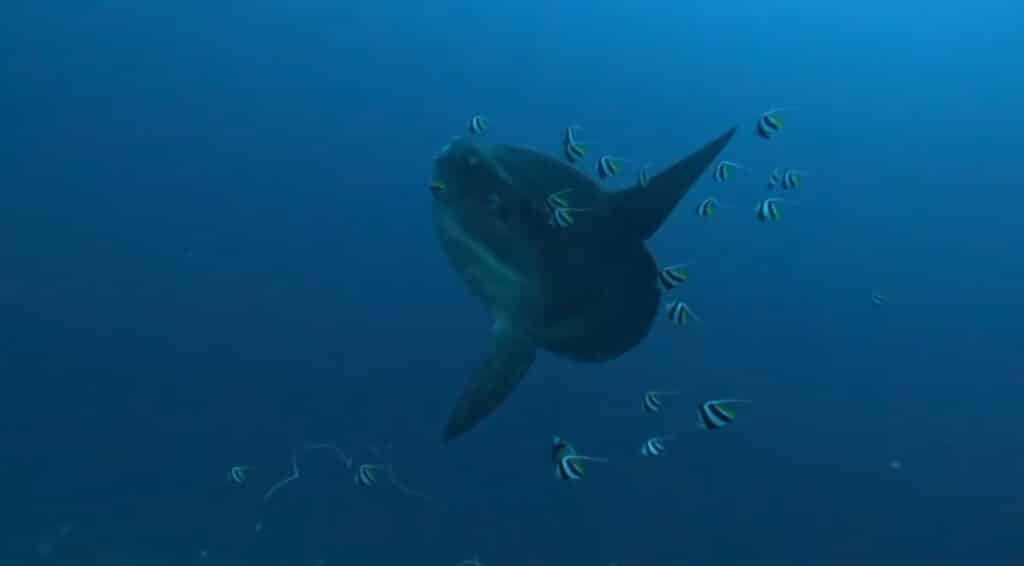
We have expert guides who know the signs — a school of bannerfish “waiting” at a cleaning station, that first drop in temperature, the way the current behaves at a known corner — and that knowledge genuinely stacks the odds in your favour. But we won’t pretend a sighting is ever guaranteed. This is wild, unpredictable wildlife behaviour, not a show on a schedule, and any operator who promises otherwise isn’t being straight with you.
What you’re actually watching, if you’re lucky, is a cleaning session: the mola holds still in the water column while smaller fish pick parasites off its skin. It’s a genuinely fragile moment — if the mola feels crowded or pressured, it will simply sink back into the deep and the moment is over. That’s why our guides keep the group slow, low, and at a respectful distance, and why we ask you to do the same: no chasing, no cutting across its path, no crowding the cleaning station, and no flash photography. Give it space, let the cleaner fish finish their work, and let the mola decide how close it wants to come.
Even on the dives where a mola doesn’t show, you’re still diving one of the most complete reef systems on the island — healthy coral, dramatic drop-offs, and a genuine chance at reef sharks and mantas nearby.
Come Search For The Elusive Mola Mola With Us!
Our Nusa Penida boat dives run daily through mola season, with early departures specifically timed to give you the best odds before the crowds arrive. If you’re staying with us at the Penida resort, you’ve got the added advantage of multiple mornings to try — which, with a fish this unpredictable, genuinely makes a difference.
Get in touch via WhatsApp or drop us a message to check availability for this season