There’s a moment before your first dive in Nusa Penida when curiosity, nerves, and excitement all seem to arrive at once. Marine life, conditions, and dive sites here can feel very different from other parts of Bali and Indonesia, making it so special. So, what makes diving in Nusa Penida so different and unique to anywhere else in the world? It could be the nutrient rich currents keeping coral vibrant and supporting diverse ecosystems with usually pristine visibility. Or maybe it’s the chance to come face to face with some of the oceans most iconic species, from oceanic mantas gliding through cleaning stations to the elusive mola mola fish attracting divers from all over the world.
What are the conditions like for diving in Nusa Penida?
This can be a difficult question to answer, because conditions in Nusa Penida can change day by day — and that unpredictability is part of what makes diving here so exciting. Between July and September, water temperatures can range from around 19°C to 28°C, so a wetsuit is always recommended, typically between 3mm and 5mm depending on the season. Most dives around Penida are drift dives and can feel incredibly exhilarating, allowing divers to move naturally with the ocean.
At sites around the PED area (Penida East), higher tides can create beautiful drift conditions, where you feel as though you’re flying over the reef, weaving gently in and out of coral bommies. That said, it’s essential to choose a dive centre with experienced guides who know these reefs like the back of their hand.
While the currents here are a big part of what makes Penida so special, they can also bring added risk if dives are not led by experienced guides. Differences in water temperature and salinity can create strong up and down currents, which is why it’s so important to always listen to your guide and choose a dive centre that prioritises safety, relaxation, and truly enjoying the underwater beauty on offer.
What marine life is found in Penida?
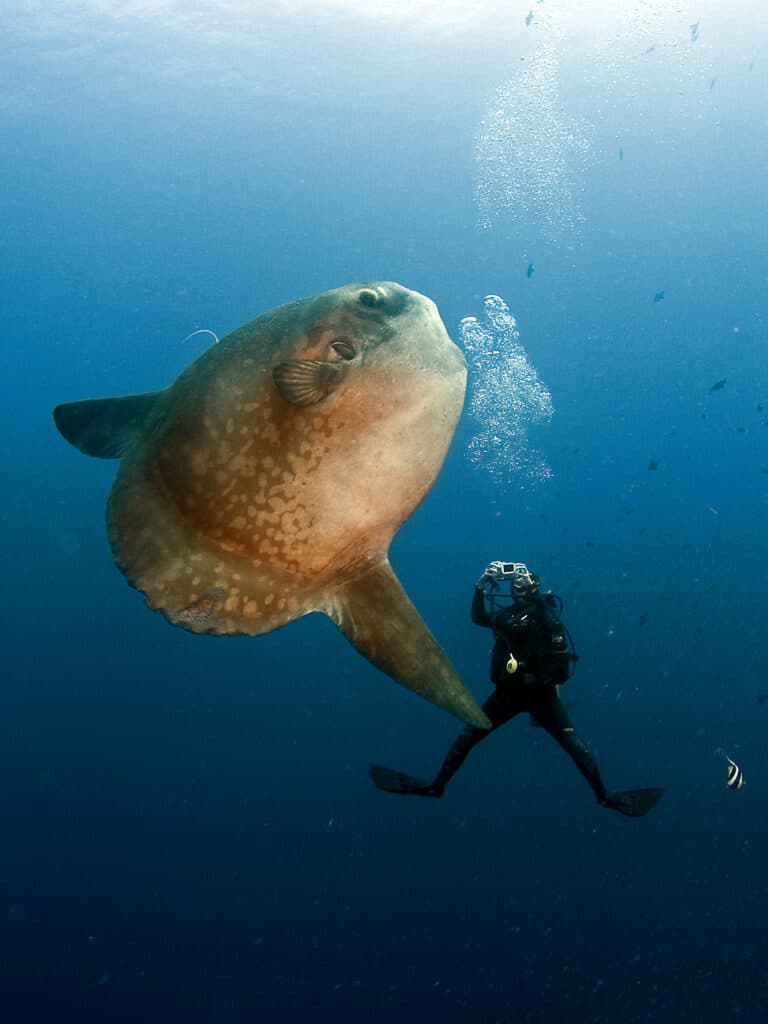
This is where it gets really exciting. Nusa Penida is most famous for being home to the elusive mola mola sunfish, one of the most unique species divers hope to encounter in Indonesia. The mola mola can reach up to 14 feet in length and weigh as much as 2,300 kg, making them the world’s heaviest bony fish. Between June and September, cooler water temperatures around Penida bring mola mola to shallower depths, often between 20–30 metres, increasing the chances of sightings for divers. Sites such as Crystal Bay are particularly well known for mola mola cleaning stations during these months.
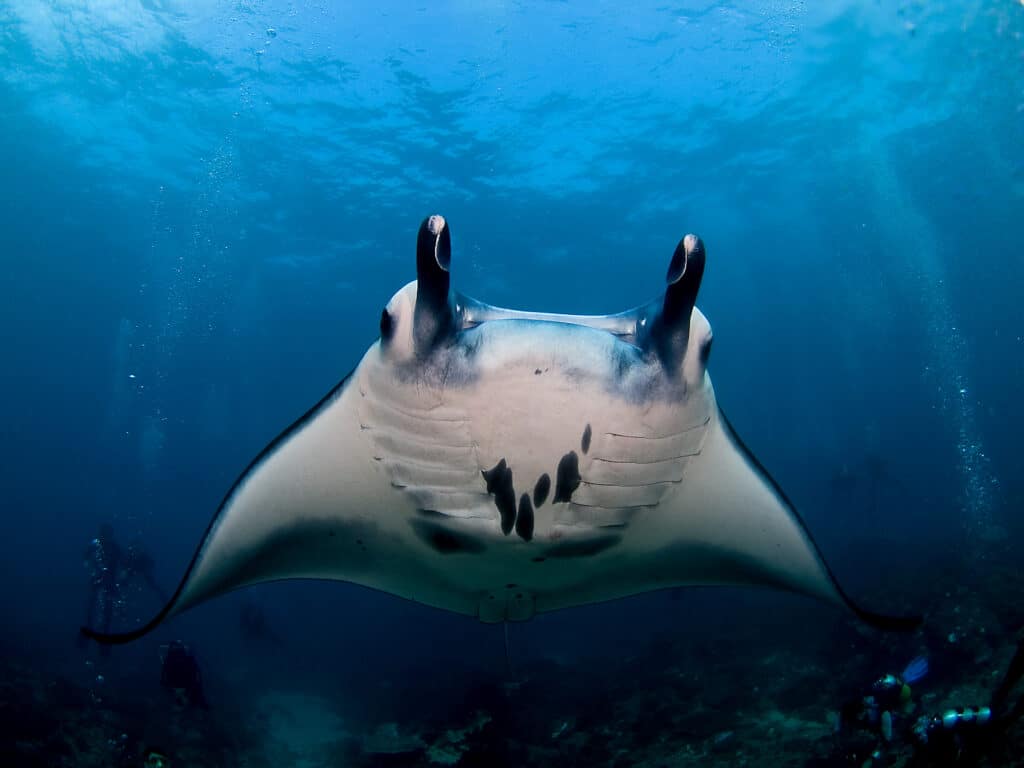
On the west side of the island, Manta Point and Manta Bay are famous cleaning stations, home to oceanic and reef manta rays that glide gracefully through the area year-round. Divers can also expect to see bamboo sharks, octopus, white tip reef sharks, moray eels, blue-spotted stingrays, giant frogfish, and countless species of tropical reef fish.
At sites such as Blue Corner and Sental, the deeper walls and stronger currents create conditions where almost anything can appear. These sites are known for attracting larger pelagic species, and on the right day divers may encounter large schools of fish, eagle rays, or even schooling hammerhead sharks passing through deeper water. Very rarely, extraordinary sightings such as whale sharks have also been reported in these nutrient-rich waters, highlighting just how wild and unpredictable diving in Nusa Penida can be.
Who is diving in Nusa Penida best suited for?
Nusa Penida can accommodate divers of all experience levels, so don’t panic. Whether you are taking your very first breaths underwater or you are a certified diver looking to build confidence and skills, this underwater paradise offers a wide range of dive experiences when guided by experienced professionals.
For beginners, calm and sheltered sites such as Manta Point, Lembongan Bay, and Crystal Bay are often selected for courses and Discover Scuba Diving experiences, depending on daily conditions. These sites allow new divers to focus on buoyancy, breathing, and enjoying the marine life, while being closely supervised by instructors who know the area intimately.
For certified divers, Nusa Penida is especially rewarding for those who enjoy dynamic conditions and want to progress their diving. The island’s currents provide exciting drift dives and opportunities to improve situational awareness, buoyancy control, and confidence in moving water. This makes Penida an excellent location for Advanced Open Water courses and continuing education, where divers learn to read conditions and adapt their skills both during the day and on night dives.
Nusa Penida is best suited for divers who are curious, open to learning, and excited by the unpredictable nature of the ocean. While conditions can change, experienced dive centres carefully select sites each day based on tides, currents, and diver experience, ensuring dives remain safe, enjoyable, and unforgettable.