Explore Amed’s best dive sites, from the Liberty Shipwreck in Tulamben to black-sand macro dives, with Jukung Dive Bali’s trusted PADI 5-Star dive centre.
Amed Dive Sites and Fun Dives
Amed and Tulamben Dive Sites Guide, from Liberty Wreck to Black Sand Macro
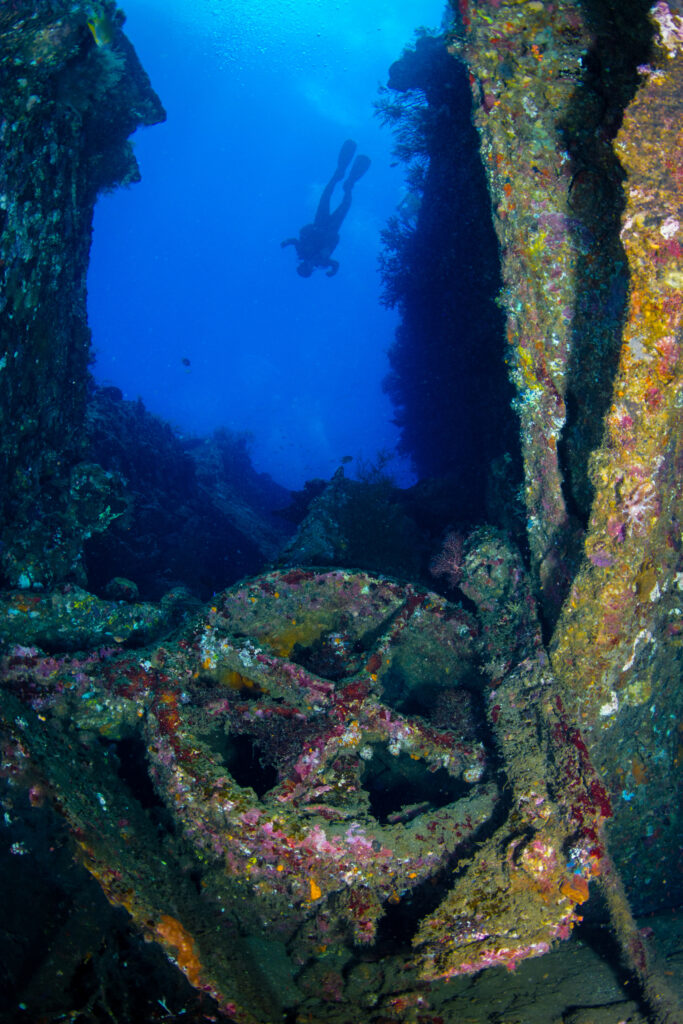
Amed and Tulamben, two neighbouring coastal villages in East Bali, are home to some of Indonesia’s most diverse and accessible dive sites. From the world-famous USAT Liberty Shipwreck in Tulamben, a 120-metre WWII cargo ship now covered in coral and schooling fish. To Amed’s black-sand slopes famous for macro diving, every site offers something unique. Expect encounters with ghost pipefish, nudibranchs, pygmy seahorses, garden eels, turtles, and reef sharks cruising the wrecks and walls.
Amed is also one of Bali’s best areas for PADI Discover Scuba Diving and PADI Open Water Courses, thanks to calm conditions and gentle reefs. Jukung Dive Bali is the area’s first PADI 5-Star Dive Resort, and was established in 2004, remaining one of the few centres operating across both Amed and Tulamben, giving you access to every major site, from the Liberty Wreck and Japanese Shipwreck to Kubu Boga Wreck, Jemeluk Bay, and the Pyramids.
Guests staying at our Amed resort can also continue their diving journey in Nusa Penida with our second PADI 5 star dive resort seamlessly, exploring Bali’s southern highlights like Manta Point, Crystal Bay, and Toyapakeh Reef. Famous for searching for the elusive mola mola, and diving alongside manta rays. Whether you’re planning your first underwater adventure or a professional photography trip, Jukung Dive Bali connects the best of Amed, Tulamben, and Penida under one trusted 5-Star PADI brand.
Wreck Dives in Amed and Tulamben
USAT Liberty Wreck, Tulamben
Depth: 5-30m
Difficulty: Easy
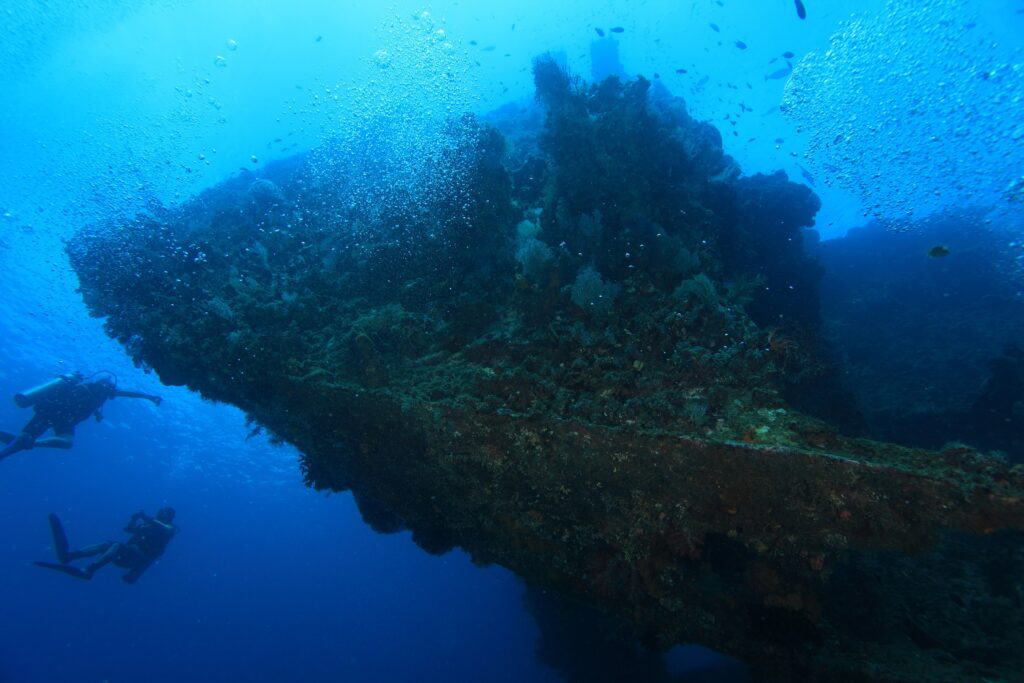
A world-famous wreck dive in Bali, the USAT Liberty Shipwreck is a 120 metre WWII cargo ship resting just 25 metres from the shore of Tulamben, East Bali. Once a barren hull, it’s now one of the island’s richest and most accessible underwater ecosystems, blanketed in hard and soft corals, sponges, and anemones that attract a huge variety of marine life.
Originally a United States Army cargo ship built in 1918, the Liberty served through both World Wars until it was torpedoed by a Japanese submarine in the Lombok Strait in 1942. The damaged ship was towed to Bali and left on the beach at Tulamben, where it remained until the 1963 eruption of Mount Agung. The volcanic tremors pushed the ship into the sea, where it settled between 5 to 30 metres deep, creating one of the most famous dive sites in Indonesia.
Today, the Liberty Wreck lies on its side just off the rocky shoreline, offering easy beach access and calm conditions ideal for beginners, fun divers, and underwater photographers. The wreck’s open holds, bow gun, and coral covered beams make it a fascinating site for exploration both day and night.
Marine Life
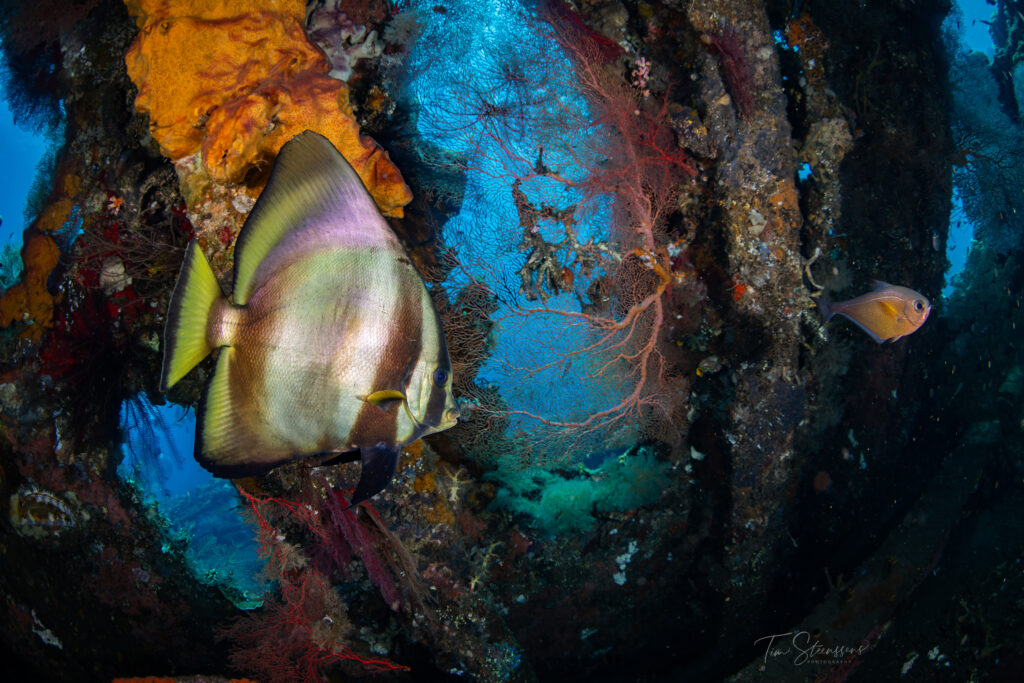
The Liberty Wreck is home to an incredible variety of marine species. Divers often encounter bigeye trevally (jackfish) schooling around the wreck, along with sweetlips, angelfish, batfish, surgeonfish, turtles, napoleon wrasse, barracudas, and occasional white tip reef sharks. Closer inspection reveals nudibranchs, ghost pipefish, and other macro life among the ship’s nooks and crannies.
On the way back to shore, watch for garden eels swaying in the sandy seabed. Night dives here reveal hunting lionfish and sleeping parrotfish, and sunrise dives may bring glimpses of bumphead parrotfish, once a resident school of the wreck before the pandemic.
Whether you’re completing your PADI Open Water Course or seeking a legendary wreck dive in Amed and Tulamben, the Liberty Shipwreck offers unforgettable experiences year round.
Kubu Boga Wreck, Tulamben
Depth: 18-40m
Difficulty: Advanced
Just north of Tulamben, the Kubu Boga Wreck is one of Bali’s newest shipwreck dive sites and a must-see for advanced divers. The wreck remains beautifully intact, creating an artificial reef that’s rapidly become a thriving home for marine life.
Originally a patrol vessel used by the Indonesian Government, the Boga was intentionally sunk in 2012 to form an underwater attraction and coral sanctuary. The ship now rests on a gentle sandy slope about 60 metres from the shore, lying between 18 to 40 metres deep and stretching approximately 45 metres in length.
Unlike the Liberty Shipwreck, the Boga is still largely whole, allowing divers to clearly make out its bow, propeller, and upper deck.
Inside, you’ll find fascinating details including a wooden steering wheel, Buddha statues, and even a submerged Volkswagen car, now covered in coral growth and home to curious marine creatures.
Because of its depth and limited natural light, the Kubu Boga Wreck is best suited to experienced divers or those undertaking PADI Deep Diver training. Exploring its passageways and structures provides an exciting challenge and a unique perspective on wreck diving in Bali.
Marine Life
The Boga Wreck attracts an impressive range of pelagic and reef species. Look out for schools of snapper, batfish, and sweetlips, along with lionfish, moray eels, and nudibranchs tucked among the coral-covered rails. Larger visitors such as trevally, barracuda, and occasional white tip reef sharks are often seen cruising through the area, while macro enthusiasts can spot leaf scorpionfish, pipefish, and shrimp gobies along the sandy slope.
Whether you’re expanding your dive experience or simply seeking a more advanced adventure after the Liberty, the Kubu Boga Wreck offers a hauntingly beautiful and rewarding underwater journey.
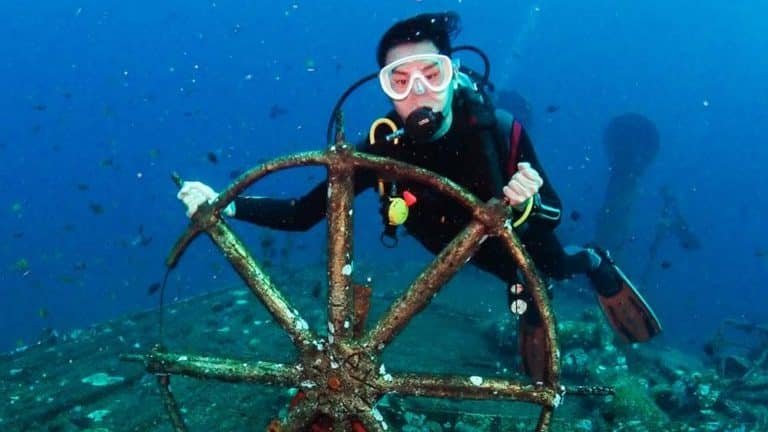
Japanese Shipwreck, Amed Tulamben
Depth 5-30m
Difficulty: Intermediate
The Japanese Shipwreck in Amed, Bali is one of the most captivating Amed dive sites, popular among underwater photographers, macro diving enthusiasts, and wreck divers alike. This small WWII wreck lies just 6 metres below the surface and slopes gently to around 30 metres, making it ideal for both intermediate divers and advanced fun dives. Located between Amed and Tulamben, this vibrant Bali dive site combines easy shore entry, colourful coral gardens, and a rich array of marine life, offering one of the best wreck dives in East Bali.
Originally believed to be a Japanese patrol boat from World War II, the wreck has become a thriving reef system and one of Bali’s most photogenic dive sites.
Divers can explore the compact wreck before continuing along the sloping reef, which is covered in barrel sponges, sea fans, and soft corals. With clear visibility, moderate currents, and occasional thermoclines that drop to 24–25°C, the Japanese Shipwreck delivers both relaxation and adventure on every dive.
Because of its easy shore entry and range of depths, it’s a perfect choice for PADI Advanced Open Water courses, deep dives, or relaxed macro photography sessions. Whether you’re exploring the wreck itself or drifting along the nearby reef, this site showcases why Amed and Tulamben are among Bali’s top diving destinations.
Marine Life
The Japanese Shipwreck Amed Tulamben is a true underwater paradise for divers. Divers can encounter leaf scorpionfish, frogfish, ghost pipefish, pygmy seahorses, nudibranchs, and moray eels, often hiding among colourful coral bommies. The surrounding reef is alive with sweetlips, angelfish, lionfish, and butterflyfish, while garden eels peek out from the sandy seabed below. On calm days, you may even spot turtles or small reef sharks cruising by.
The site’s mixture of vibrant coral, photogenic wreckage, and diverse marine life makes it one of the best diving spots in Amed, Bali, and a must-see stop for underwater photographers.
Amed Coral and Garden Dives
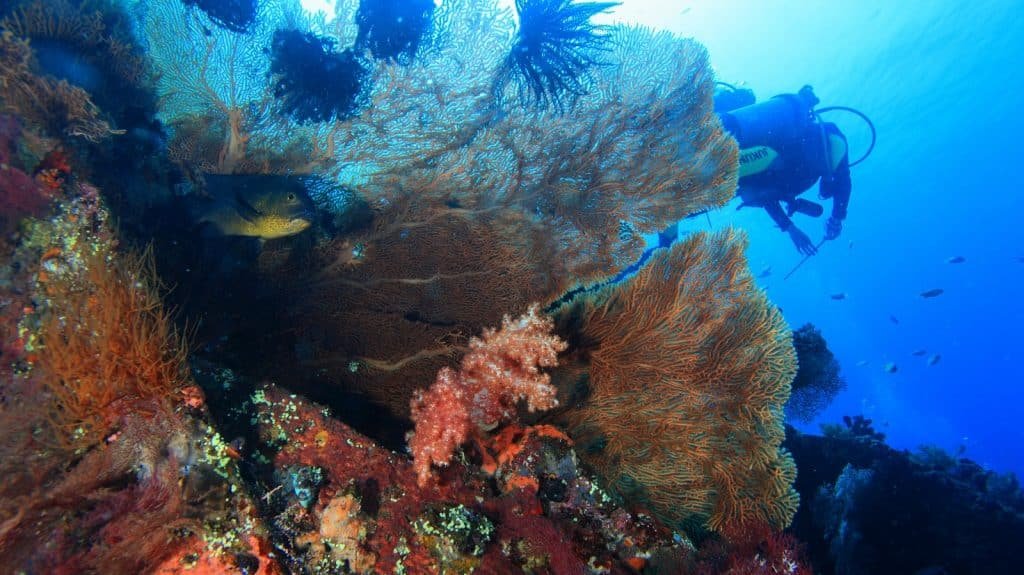
Coral Garden & Tulamben Drop-Off
Depth: 3–30 m
Difficulty: All Levels The Coral Garden and Tulamben Drop-Off are two of the most scenic and beginner-friendly dive sites in Bali, offering a mix of shallow coral reefs, unique underwater sculptures, and deeper walls for exploration. Situated between the Liberty Shipwreck and Tulamben Wall, this area combines calm conditions, vivid marine biodiversity, and easy shore entry, making it a favourite among both divers and snorkellers visiting Amed and Tulamben.
The Coral Garden Tulamben stretches for over 150 metres along the bay, featuring vibrant hard and soft corals, sea anemones, and schools of tropical reef fish. Scattered across the sandy seabed, a series of sunken Balinese and Buddha statues form an artificial reef, now home to juvenile lionfish, clownfish, moray eels, and shrimp.
Its shallow depth and crystal-clear visibility make it one of the best snorkelling and underwater photography sites in Bali.
Just beyond lies the Tulamben Drop-Off (Tulamben Wall), a breathtaking lava wall formed by the eruption of Mount Agung in 1963. Starting at just 3 metres and plunging to over 80 metres, this dramatic vertical reef is draped in sponges, gorgonians, and black coral, attracting turtles, sweetlips, trevallies, and reef sharks. It’s suitable for all levels of divers, from PADI Open Water courses to Advanced deep training dives.
With calm seas year-round, easy logistics, and stunning marine life, the Coral Garden and Drop-Off are must-dive spots for anyone exploring Amed and Tulamben diving. Whether you’re looking for a relaxed fun dive, a training site, or an iconic Bali underwater photography location, these reefs deliver an unforgettable experience both day and night.
Marine Life
This area is a haven for marine enthusiasts. Expect to encounter leaf scorpionfish, frogfish, nudibranchs, ribbon eels, moray eels, lionfish, and turtles gliding through the coral. The Drop-Off hosts barracudas, jackfish schools, and the occasional white-tip reef shark, while macro photographers can capture pygmy seahorses, shrimp, and tiny crabs among the coral bommies. Calm currents, shallow slopes, and year-round visibility make this one of the best coral reef dives in Bali.
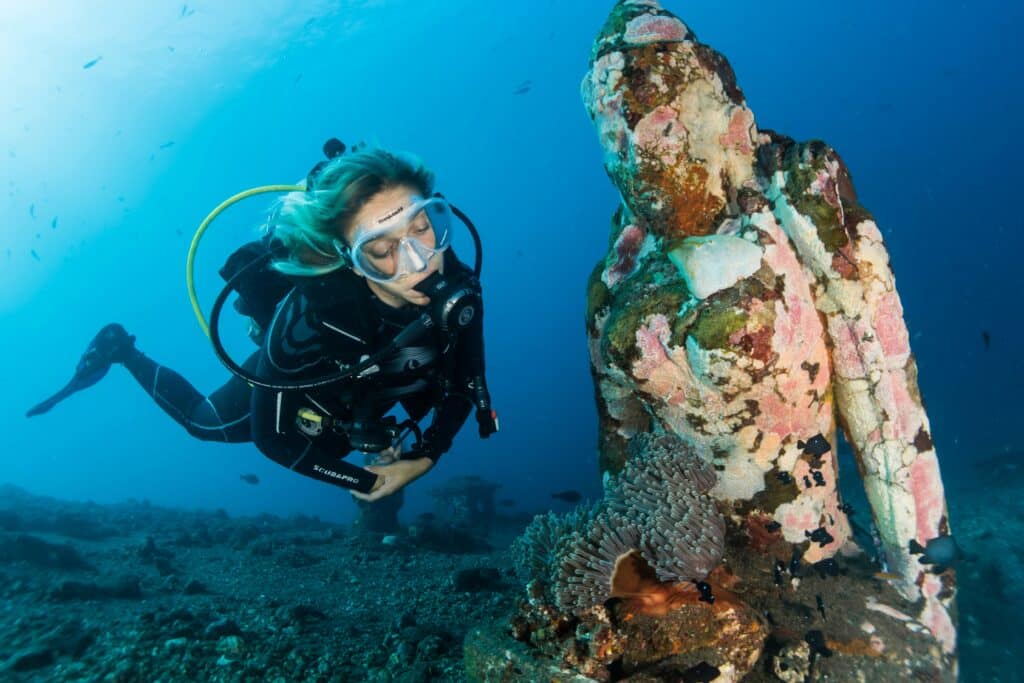
Jemeluk Bay, Amed Bali
Depth: 5–30 m
Difficulty: All Levels
Jemeluk Bay, also known as the Amed House Reef, is the heart of Amed diving and one of the most popular reef sites in Bali. This area actually includes three different dive sites: Jemeluk Bay, Amed Wall, and Bunutan Reef. Jemeluk Bay itself is easily accessible directly from the beach or by traditional jukung boat and is especially well suited to dive training and divers of all levels. Starting from calm, sandy shallows, the reef gradually slopes down and is ideal for Open Water courses, refreshers, relaxed fun dives, and underwater photography. The west side of Jemeluk Bay is perfect for training dives, with shallow, sandy areas that provide a safe and controlled environment for practising buoyancy and core scuba skills.
Marine life at Jemeluk Bay is diverse and abundant, with nudibranchs, seahorses, leaf scorpionfish, ribbon eels, and the occasional ghost pipefish or mimic octopus hiding among the sand. Schools of trevallies, batfish, and surgeonfish are commonly seen along the reef, while turtles and moray eels are frequent visitors. With calm conditions, easy shore access, and excellent biodiversity, Jemeluk Bay is suitable for beginners, certified divers, and photographers alike.
Amed Wall is located between Jemeluk Bay and the Pyramid dive site and is typically accessed by jukung boat. This site features a deeper coral wall and is suitable for certified divers looking to explore more depth and reef structure. Bunutan Reef is located approximately 10 minutes by boat to the east of Jemeluk Bay and is well known for its drift diving. Due to stronger currents, Bunutan is recommended for advanced certified divers. Together, these three sites make Jemeluk one of the most versatile dive areas in Amed, offering something for every experience level.
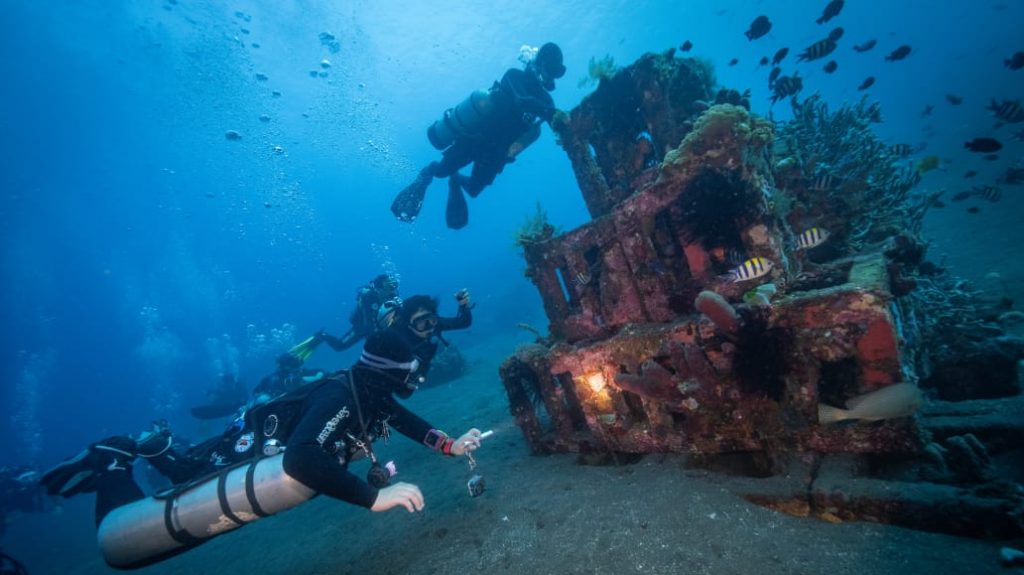
Pyramids, Amed Bali
Depth: 5–30 m
Difficulty: All levels
Pyramids is one of the signature Amed dive sites, an easy to reach reef just off the beach near Jemeluk Bay. The site is named after a long line of concrete pyramid reef structures that were installed by the local community and dive operators to restore coral and attract fish. These frames now sit among natural coral heads on a gentle sandy slope, creating a colourful playground for fun dives, photography, and relaxed drift dives in Amed and Tulamben.
Entry is simple from the shore or by jukung boat. You can meander between the pyramid frames and bommies at 5 to 18 metres, then follow the slope to around 25 to 30 metres where larger sea fans and sponges appear.
Conditions are usually calm with a light current that makes for a comfortable drift back toward Jemeluk, and the site is popular for PADI Open Water training, Advanced navigation, and night dives.
Marine Life
The artificial reef has created a rich habitat for both reef fish and macro life. Expect schools of fusiliers, snappers, batfish, sweetlips, and frequent turtles grazing on the reef. In the sandy patches, look for ribbon eels, garden eels, blue spotted rays, and shrimp goby pairs. Macro enthusiasts often find leaf scorpionfish, frogfish, nudibranchs, and ghost pipefish on the frames and coral heads, while the deeper section can bring trevallies, barracuda, and the occasional white tip reef shark cruising by. Night dives reveal hunting octopus, cuttlefish, and sometimes Spanish dancer nudibranchs.
With easy access, varied depths, and lively marine life, Pyramids is a must on any Amed diving itinerary, perfect for beginners, returning divers, and underwater photographers alike.
Drift and Advanced Dives in Amed and Tulamben
Bunutan Drift & Amed Wall, Bali
Depth: 5–40 m
Difficulty: Intermediate
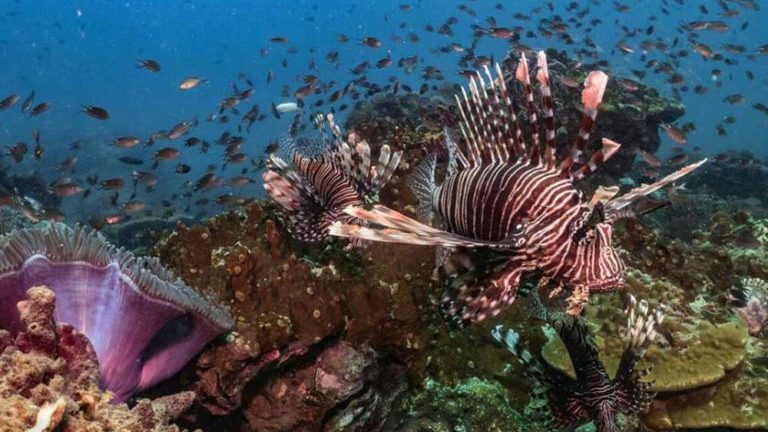
Bunutan is one of the classic Amed drift dives, reached by traditional jukung boat to an easy drop point. The dive begins over a wide eel garden on the sand, then follows a steady current along a rich reef covered in big barrel sponges, giant gorgonian fans, hard and soft corals. The flow is usually comfortable and lets you glide effortlessly across the slope, finishing over a shallow coral plateau where the boat meets you for pickup. It is an excellent Amed dive site for confident beginners moving up, and a favourite for fun dives and underwater photography thanks to great visibility and healthy reef.
Just around the corner, the Amed Wall drops more steeply to about 40 metres, its vertical face draped in sea fans, sponges, black coral and soft coral. When the current runs, this section becomes a beautiful drift wall with wide angle scenery, ideal for Advanced and drift specialty divers.
Marine Life
Expect large garden eels at the start, then schools of fusiliers, trevallies, and batfish sweeping past the fans. On the reef, look for lionfish, angelfish, triggerfish, pufferfish, moray eels, leaf scorpionfish, and plenty of nudibranchs. Bigger visitors such as turtles, barracuda, and occasional white tip reef sharks cruise the wall, while the shallows host anthias, damsels, and butterflyfish over the coral garden.
With its easy boat logistics, flowing drift, and stunning coral scenery, Bunutan and the Amed Wall are must do sites on any Amed and Tulamben diving itinerary.
Batu Kelebit (Twin Ridges), Amed Bali
Depth: 8–30 m
Difficulty: Intermediate
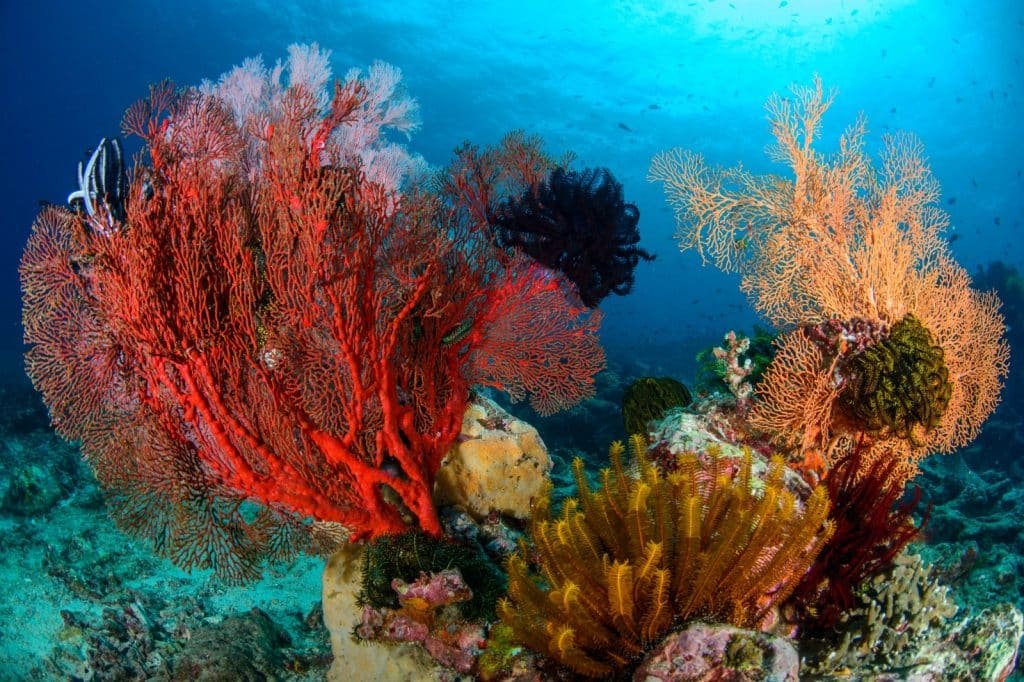
Batu Kelebit is a signature stop on our Amed dive sites list and one of the best Amed fun dives by jukung boat. Just south of Tulamben, this Amed drift dive follows two pinnacles (twin ridges) split by bright white-sand channels—a striking contrast to Tulamben’s black sand. The ridges are covered in hard coral, fire coral, barrel sponges and large gorgonian fans, with typically cooler water and a moderate current that makes this a smooth boat dive near Tulamben for confident, intermediate divers.
Marine Life & Why It’s Popular for Amed Bali Diving
Contours + current funnel plankton, drawing schools of trevallies, fusiliers, sweetlips, batfish and hunting barracuda. Macro hunters can find leaf scorpionfish, nudibranchs and pygmy seahorses on the fans. Bigger visitors on this Amed Bali diving site include turtles, Napoleon wrasse, eagle rays, tuna and white-tip reef sharks; rare offshore encounters with thresher or hammerhead sharks are reported in season. Clear water, pinnacle topography and pelagics make Batu Kelebit a must for Amed and Tulamben diving and a favourite for wide-angle photography.
Gili Selang (Amed)
Depth: 5-35 m
Difficulty: Advanced
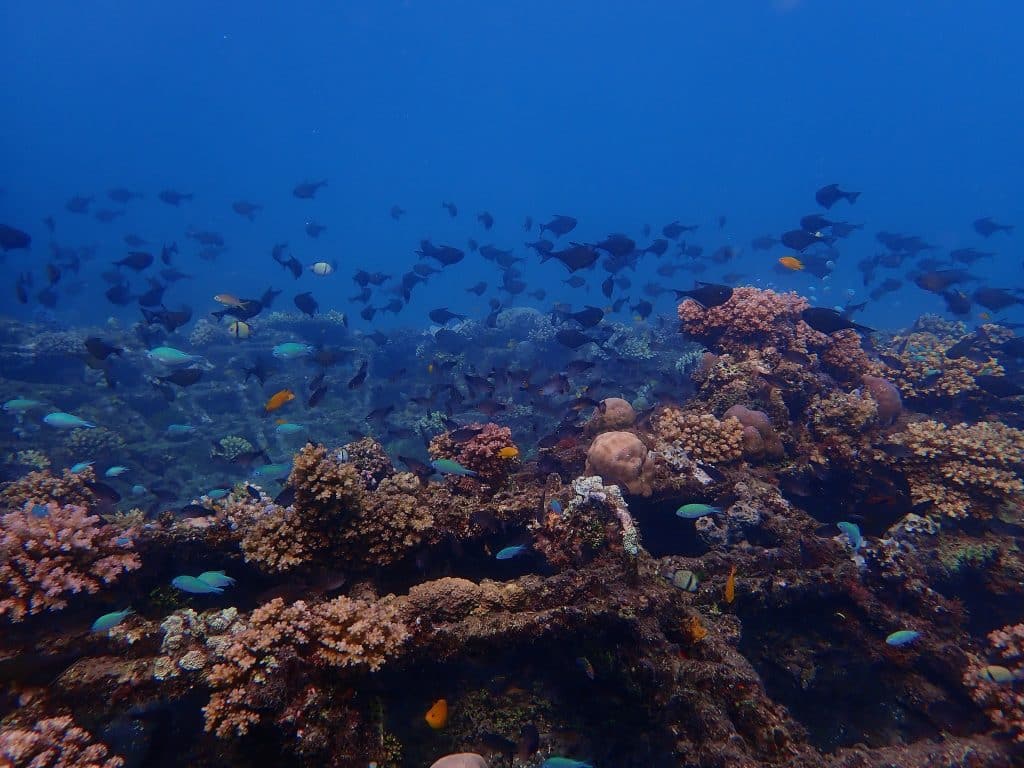
At the far eastern tip of Bali, Gili Selang sits on the edge of the Lombok Strait and is one of the most advanced Amed Dive Sites. Exposed to oceanic flow, the site can deliver up-currents, down-currents and swirling eddies, so it’s recommended only for experienced, drift-certified divers who are comfortable following a guide and maintaining tight buddy contact. When conditions line up, the payoff is world-class Scuba Diving Amed with clear water, big fish and flourishing coral.
Topography. A steep volcanic slope of rounded rocks and boulders that transitions to ledges and short walls.
North side. A sand slope with stands of branching hard coral and scattered bommies; deeper sections are more protected with sea fans, soft corals, barrel sponges and coral bushes.
Be alert near the corner, currents can pull divers out of the bay.
South side (Waterloo). Steeper but generally calmer if you stay out of the eastern flow; exceptionally rich hard and soft coral, large bommies and huge Acropora tables. Marine Life. Expect big-water action: giant trevally, tuna, rainbow runners, dense fusilier and anthias clouds, turtles, bumphead parrotfish and white-tip reef sharks. In the blue, watch for eagle rays and the occasional hammerhead; in cooler season a lucky few encounter Mola mola. On the reef, photographers can find leaf scorpionfish, nudibranchs, octopus and pygmy seahorse on larger fans, prime Scuba Diving Amed photo subjects.
Trip tip: Pair this safari with a calmer second dive such as the Liberty Shipwreck Amed if conditions are running fast.
Emerald (Palung Palung) – Amed Bali
Depth: 3–30 m
Difficulty: Intermediate
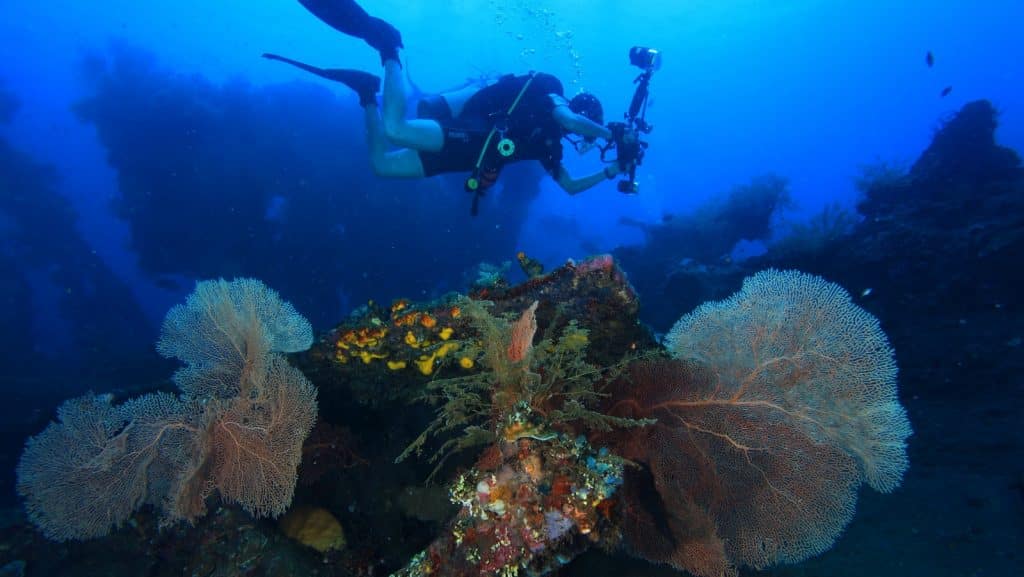
A quiet favourite on our curated list of Amed Dive Sites, Emerald (Palung Palung) sits just past Batu Kelebit, a short jukung boat ride from Amed and south of Tulamben. Palung means gully in Indonesian, you begin in a sandy trough that opens onto a gentle sloping reef covered in healthy hard corals, gorgonian fans and sponges. Start the dive around 10–12 m, follow the slope to 25–30 m, then return along the shallower reef top for long bottom time and easy safety stops. Conditions are often calm at the entry, but a building current can turn the return into a relaxed drift, which is why Emerald pairs so well with Scuba Diving Amed courses and fun dives. The site sees fewer visitors, so coral heads are large and pristine, perfect for both wide-angle scenes and Macro Diving Amed.
Coral variety is outstanding: brain and honeycomb corals, tabling Acropora, rose-coloured branching and mushroom corals, plus purple tube sponges over briar coral fields and the occasional blue sea star across the reef top. Many guests combine Emerald with Liberty Shipwreck Amed or Batu Kelebit for a two-dive boat trip.
Marine Life
Expect white-tip reef sharks tucked under table corals or cruising the slope, green and hawksbill turtles, schools of trevallies, fusiliers, sweetlips, batfish and hunting barracuda. In the sand and coral pockets look for ribbon eels, garden eels, blue-spotted rays, octopus, cuttlefish, leaf scorpionfish, pipefish and plenty of nudibranchs; check larger fans carefully for the occasional pygmy seahorse. Clear water and soft afternoon light make Emerald a favourite for photographers and a must-do on any Amed Dive Sites itinerary.
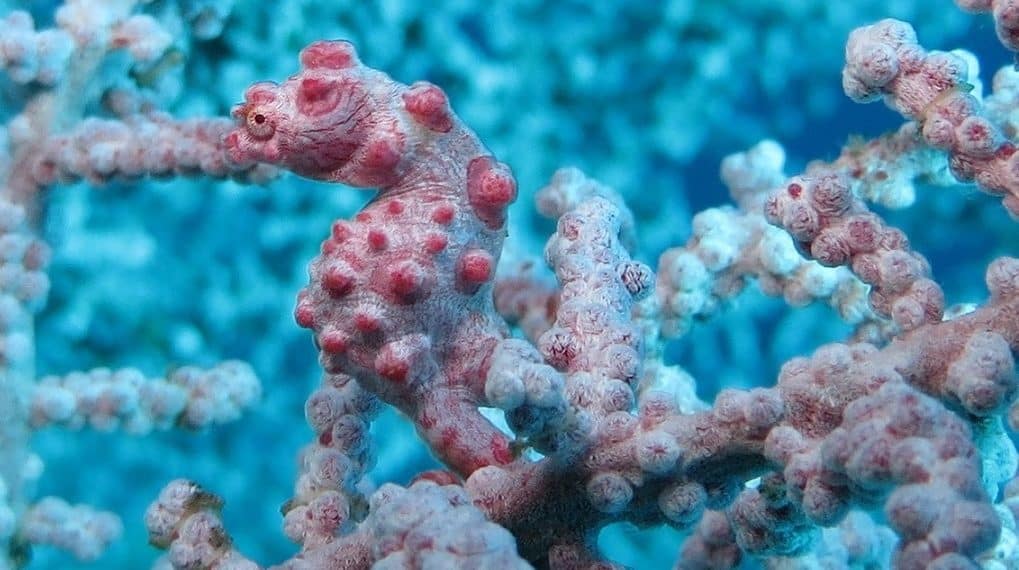
Melasti (Amed) – Macro Diving Amed
Depth: 3–35 m
Difficulty: Advanced
A favourite on our Amed Dive Sites map, Melasti Amed is a black-sand muck diving slope that delivers the best of Macro Diving Amed. Entry is a simple shore wade; once you drop onto the gentle volcanic sand, slow down and let your eyes adjust—this site is packed with photogenic critters that hide in algae tufts, rubble patches and small coral heads. Conditions are usually calm with light surge; dives are slow and deliberate, perfect for photographers and naturalists who enjoy patient hunting and precise buoyancy. For itinerary balance, many guests pair Melasti with a classic reef or the Liberty Shipwreck Amed later in the day.
What to expect. The terrain is a gradual slope of fine black sand with scattered debris, tyres/frames that act as micro-reefs, and isolated bommies between 5–25 m.
Visibility varies with swell, but the dark bottom makes colours pop in photos. Bring a focus light and a 60–100 mm macro lens or compact with diopter; good fin control and low silt are essential to keep the scene clear.
Marine Life (macro highlights).
- Signature finds: harlequin shrimp, nudibranch galore (Thecacera, Nembrotha, Hypselodoris), rhinopias (occasional), leaf scorpionfish
- Cephalopods: mimic and wunderpus octopus, long-arm octopus, juvenile reef octopus, bobtail squid
- Crustaceans: zebra crabs on fire urchins, boxer shrimps, coleman shrimp, ornate ghost pipefish (seasonal)
- Oddities: frogfish (painted/warty/juvenile), pipefish, seahorses, snake eels, sand divers, blue-spotted rays on the flats
- Night dives reveal bobbit worms, stargazers and hunting cuttlefish, top-tier Scuba Diving Amed photo opportunities.
Tips for success. Move slowly, keep fins up, and signal your guide when you find a subject so everyone can enjoy it. Because Melasti is photo-centric, groups are small and bottom times are generous; nitrox is recommended for long, shallow macro sessions.
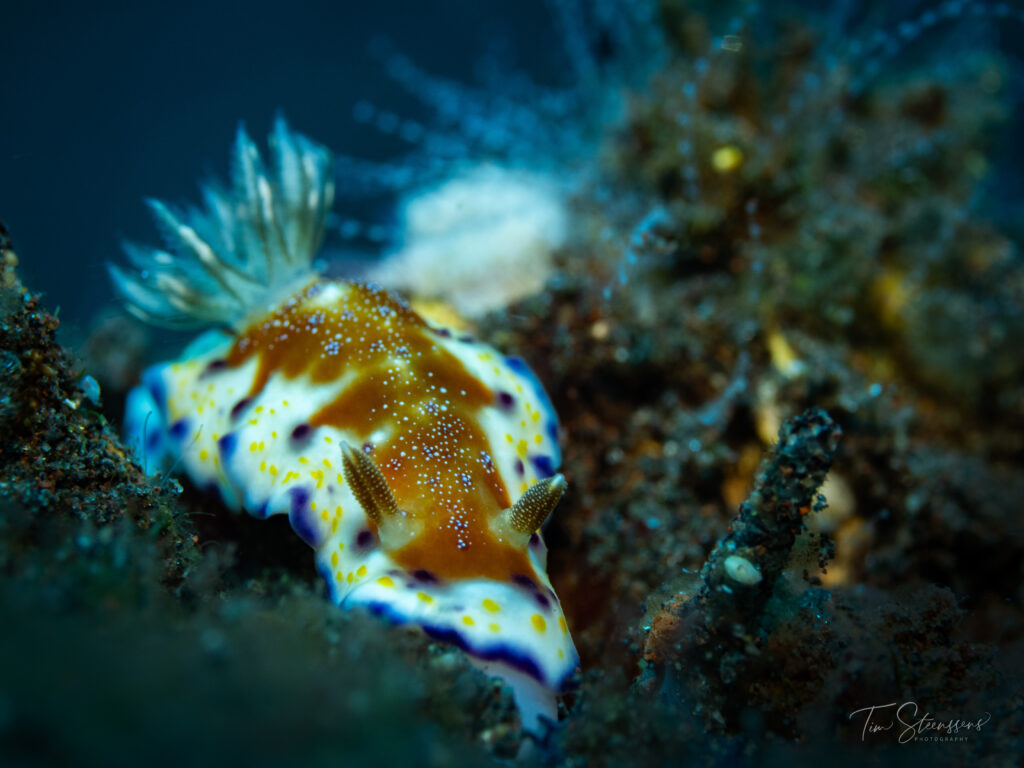
Seraya Secret (Amed)
Depth: 3-35m
Difficulty: Advanced
Among all Amed Dive Sites, Seraya Secret stands out as one of Bali’s most iconic locations for Macro Diving Amed and Underwater Photography. This world-famous muck diving site lies just north of Tulamben and offers some of the best opportunities for photographers and divers who love discovering the tiny, unusual, and extraordinary.
At first glance, the black sandy slope may seem empty, but look closer — every patch of rubble hides a secret. You’ll find flamboyant cuttlefish, harlequin shrimp, ghost pipefish, and dozens of species of nudibranchs. The dark volcanic sand enhances colour and contrast, making Seraya one of the most rewarding sites for Scuba Diving Amed enthusiasts and macro photographers alike.
Seraya Secret is divided into three sections: Top Secrets, Deep Secrets, and Noisy Secrets, the latter named after the chirping sounds of juvenile triggerfish.
The site offers gentle conditions, making it ideal for calm and deliberate dives focused on small critters and detailed photography.
Marine Life (macro highlights):
- Cephalopods: Mimic octopus, wunderpus, long-arm octopus, bobtail squid
- Crustaceans: Harlequin shrimp, zebra crabs, boxer shrimp, Coleman shrimp
- Fish: Frogfish (painted, warty, juvenile), ornate ghost pipefish, seahorses, sand divers
- Night dives: Stargazers, bobbit worms, hunting cuttlefish, and other rare nocturnal species
Tips for Divers: Maintain good buoyancy to avoid disturbing the sand and keep visibility clear. Bring a focus light or macro lens for the best results — Seraya Secret is known worldwide for its photo opportunities. Many divers combine this site with the Liberty Shipwreck Amed and other nearby Amed Dive Sites for a full day of Scuba Diving in Amed Bali, from wrecks to vibrant coral gardens to black-sand macro slopes.
Ready to book your Amed fun dives?
Tell us your travel dates, diving experience level, and the Amed dive sites you would like to explore, from the famous USAT Liberty Shipwreck in Tulamben to relaxed macro and drift dives along the Amed coastline. Our experienced PADI 5-Star dive team will take care of all the planning and will organise your dive schedule, and confirm availability quickly so you can focus on enjoying your time in the water.
Is Amed suitable for beginner divers and first-time scuba diving?
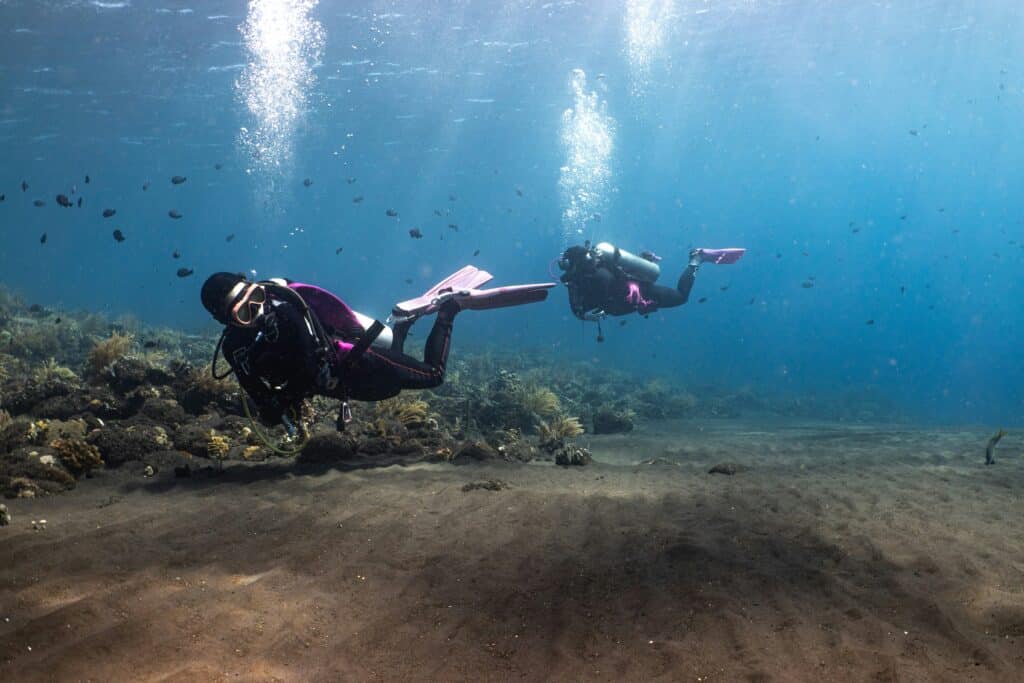
Yes, Amed is widely regarded as one of the best locations in Bali for beginner divers and first-time scuba diving. The area is known for its calm sea conditions, easy shore entries, and gently sloping reefs, making it ideal for learning and confidence building. At Jukung Dive Amed Resort, beginner divers are guided by experienced PADI professionals who focus on safety, comfort, and relaxed pacing. This quieter part of East Bali allows new divers to learn without crowds, creating a stress-free introduction to scuba diving in Indonesia.
What marine life can I expect to see while diving in Amed?
Diving in Amed offers an incredible variety of marine life, especially for macro and underwater photography enthusiasts. The black sand slopes and coral reefs are home to nudibranchs, frogfish, ghost pipefish, pygmy seahorses, cuttlefish, octopus, and a wide range of reef fish. Larger species such as turtles and schooling fish are also common, particularly around nearby sites like the USAT Liberty Shipwreck in Tulamben. Amed’s biodiversity makes it one of Bali’s most rewarding dive destinations year-round.
Do you offer guided fun dives and private dive guides in Amed?
Yes, Jukung Dive Amed Resort offers professionally guided fun dives led by experienced local dive guides. For guests looking for a more personalised experience, private dive guides are also available. Private guiding is ideal for beginner divers, underwater photographers, macro specialists, or anyone wanting extra flexibility underwater. Our dive team tailors each dive to your interests, experience level, and air consumption, ensuring relaxed and enjoyable dives across Amed’s best sites.
How close are the Amed dive sites to Jukung Dive Amed Resort?
Many of the most popular Amed dive sites are located just minutes from Jukung Dive Amed Resort. Several excellent shore diving locations are within walking distance, while others are reached by short car or boat transfers along the coastline. The famous USAT Liberty Shipwreck in Tulamben is approximately a 20 minute drive away, making it easy to include as part of a day trip. Staying in Amed allows quick access to diverse dive sites without long travel times.
Can I rent full dive gear at Jukung Dive Amed Resort?
Yes, Jukung Dive Amed Resort provides full scuba diving equipment rental for certified divers and beginners. Available gear includes masks, fins, wetsuits, BCDs, regulators, weights, and tanks. All equipment is regularly serviced and maintained to high safety standards. Renting gear on-site allows guests to travel light and enjoy a convenient, hassle-free diving experience while exploring Amed’s dive sites.
Do fun dives in Amed include lunch?
Yes, lunch is always included with fun dives at Jukung Dive Amed Resort. Whether you are joining a local shore dive in Amed or a full-day trip to nearby sites such as Tulamben and the USAT Liberty Shipwreck, a freshly prepared lunch is provided as part of your dive day. Including lunch ensures a relaxed, well-paced schedule and allows divers to focus fully on enjoying their dives without worrying about logistics. Please let our team know in advance if you have any dietary requirements, and we will be happy to accommodate them.